FitGal Mobile Wallet — UX/UI Design for an holistic fitness experience for women
FitGal is a mobile fitness app concept designed to help women build sustainable fitness routines by addressing the real, interconnected barriers that prevent consistency - not just workouts.
Role
Product Designer
Year
2024 - 2025
Responsabilities
Research, Wireframing, Prototyping, User Testing, Branding
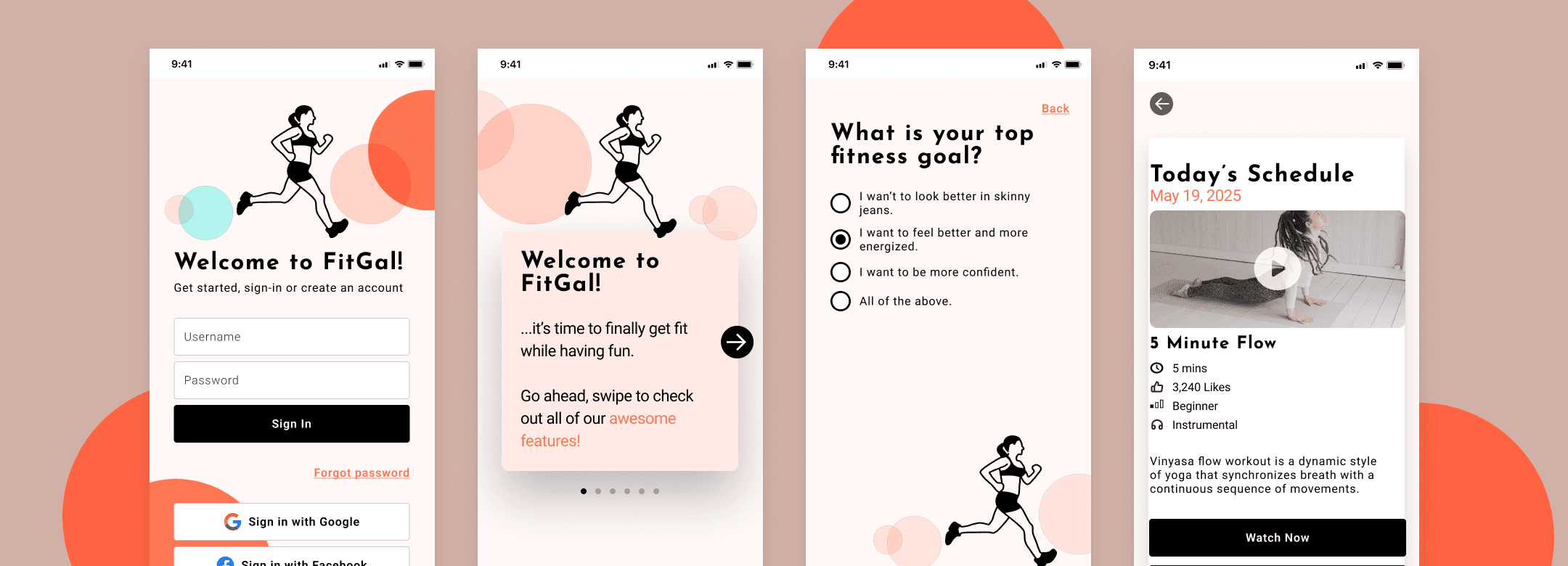
Overview
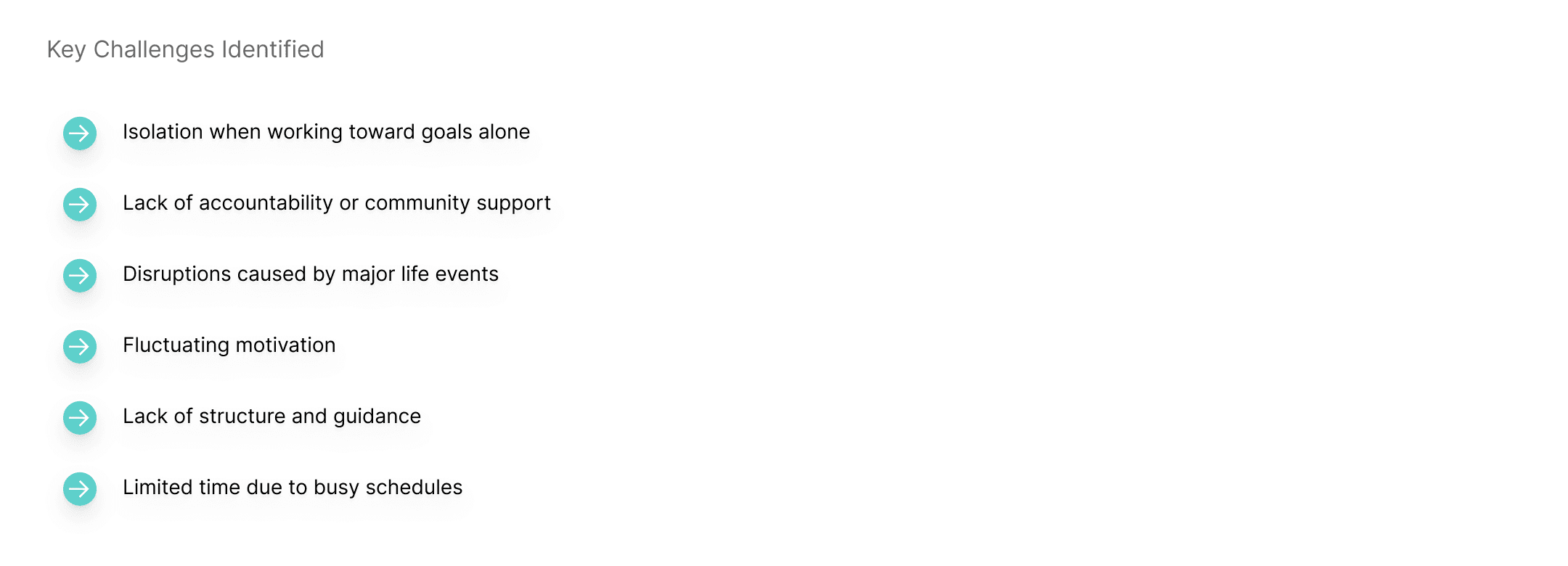
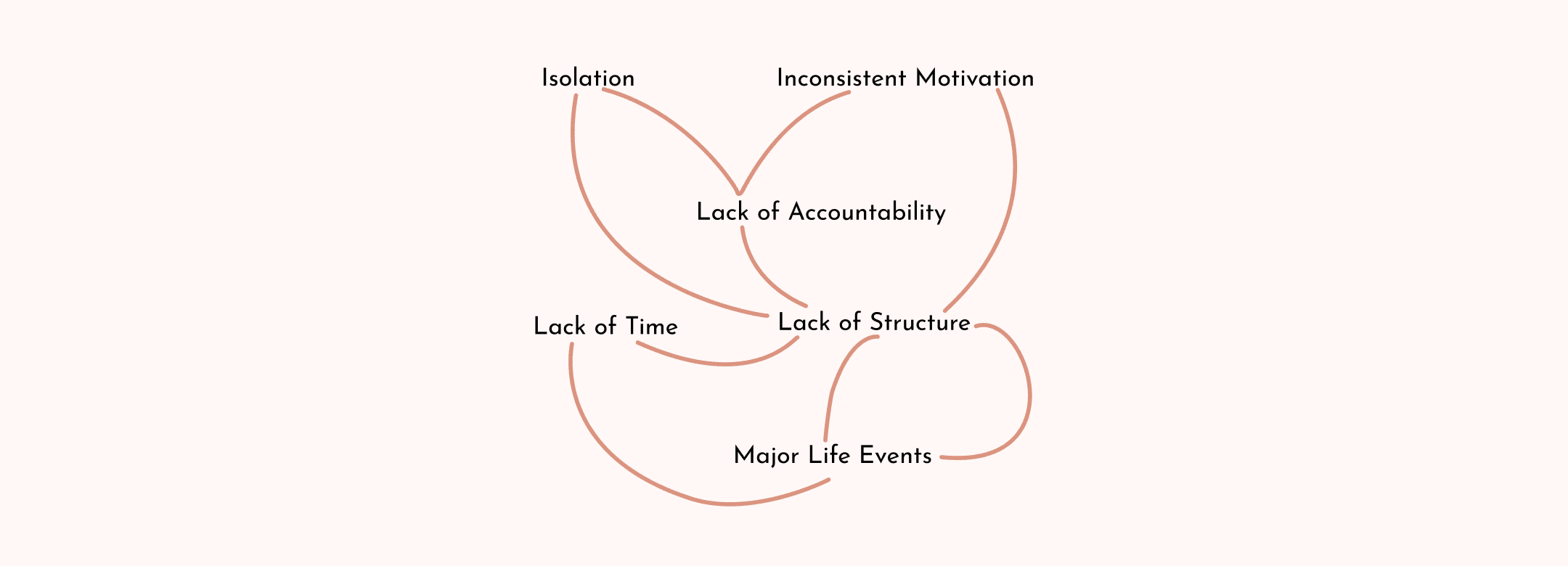
I started by identifying general pain points. Through user interviews and competitive analysis, I discovered that women don’t fail to meet their fitness goals due to a lack of motivation alone. Instead, they face a web of obstacles, time constraints, isolation, lack of accountability, inconsistent motivation, and major life events, that often appear together and compound over time.
After my initial research, I had a plan: rather than designing another workout app, I focused on creating a supportive ecosystem that blends structure, community, flexibility, and encouragement. FitGal is designed to meet users where they are, adapt to their lives, and help fitness feel achievable, enjoyable, and human.
This project showcases my end-to-end design process, from research and synthesis to wireframing, visual design, and usability testing, with a strong emphasis on human-centered design principles.
Problem
Many fitness apps focus on routines, metrics, or motivation in isolation. Through research, I found that women struggle not because they lack discipline, but because fitness often competes with work, family, mental health, and major life changes. These challenges don’t exist independently, they form an interconnected system. Solving only one rarely leads to long-term success.
Research


Insights & Hypothesis
Why most fitness apps fail: Most fitness apps focus on one dimension, workouts, tracking, or motivation, without addressing how these factors interact.
My hypothesis: If users are given structure, accountability, and community together, they are better equipped to navigate life disruptions without abandoning their fitness goals. Fitness success isn’t about perfection, it’s about resilience.
Research
To ground the product in real needs, I interviewed 15 women by Zoom and conducted a competitive analysis of existing fitness apps.
During interviews, participants shared:
How their routines change over time
What motivates them and what doesn’t
Why they stop using fitness apps
What they wish fitness felt like instead
I also analyzed current market offerings to understand:
What existing apps do well
Where they fall short emotionally and experientially
Gaps in branding, tone, and long-term engagement
This research highlighted a major opportunity: most solve individual problems but not the system of problems together.
Human-Centered User Needs
FitGal was shaped by understanding what users actually need at different stages of their fitness journey.
For new users:
They want to explore different types of exercises to discover what works for them
They need clear guidance and demonstrations to feel confident doing movements correctly
They want reassurance that they’re “doing it right,” not guessing
For returning and frequent users:
They want tools to schedule workouts and build habits over time
They need flexibility to adjust routines as life changes
They want progress to feel encouraging, not punishing
These needs directly informed how workouts, scheduling, and onboarding were designed.
Scope & Features
To validate the concept, I focused on core features that directly addressed the research findings:
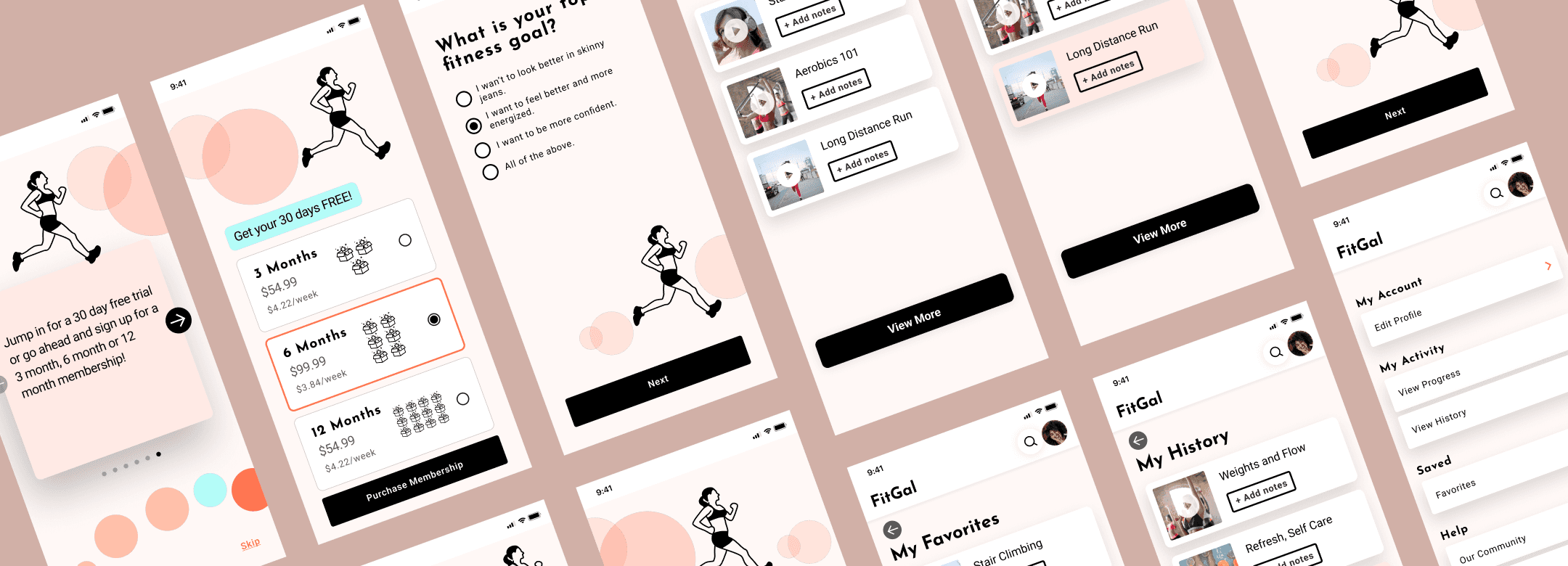
Onboarding tailored to user goals and lifestyle
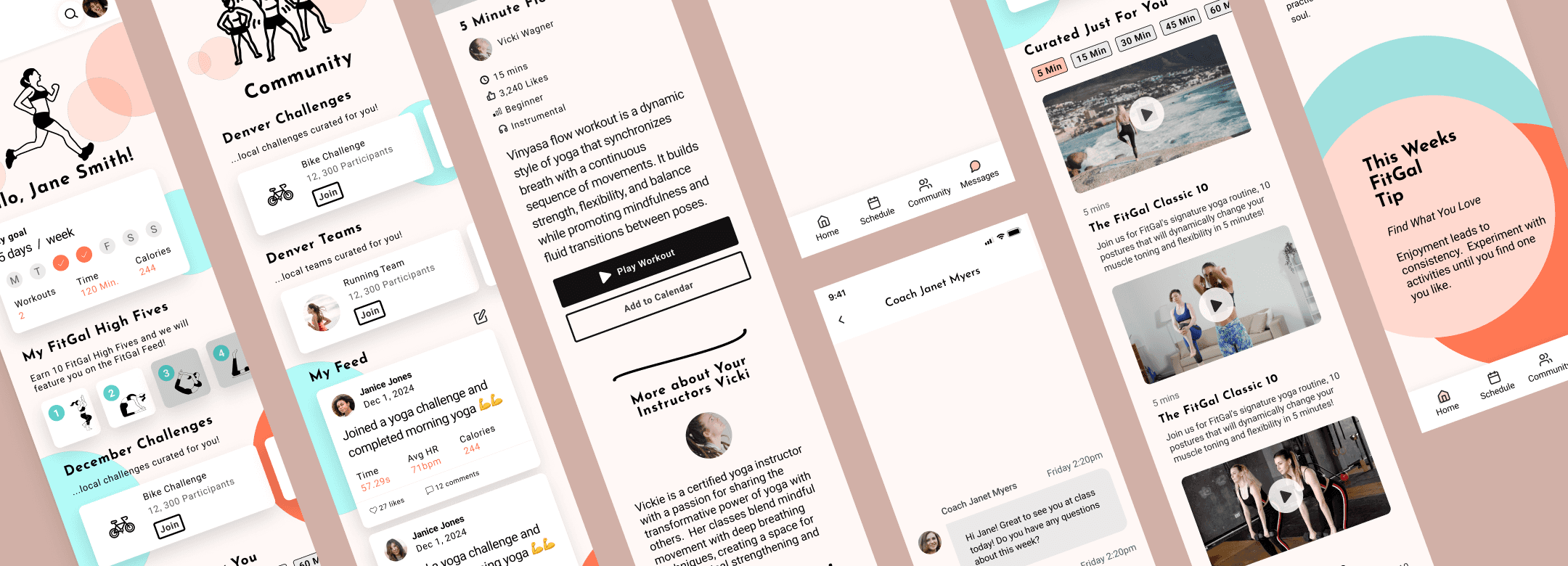
Dashboard that reduces decision fatigue
Workouts designed for flexibility and time constraints
Community features for accountability and motivation
Messaging for encouragement and connection
Progress tracking that emphasizes consistency over perfection
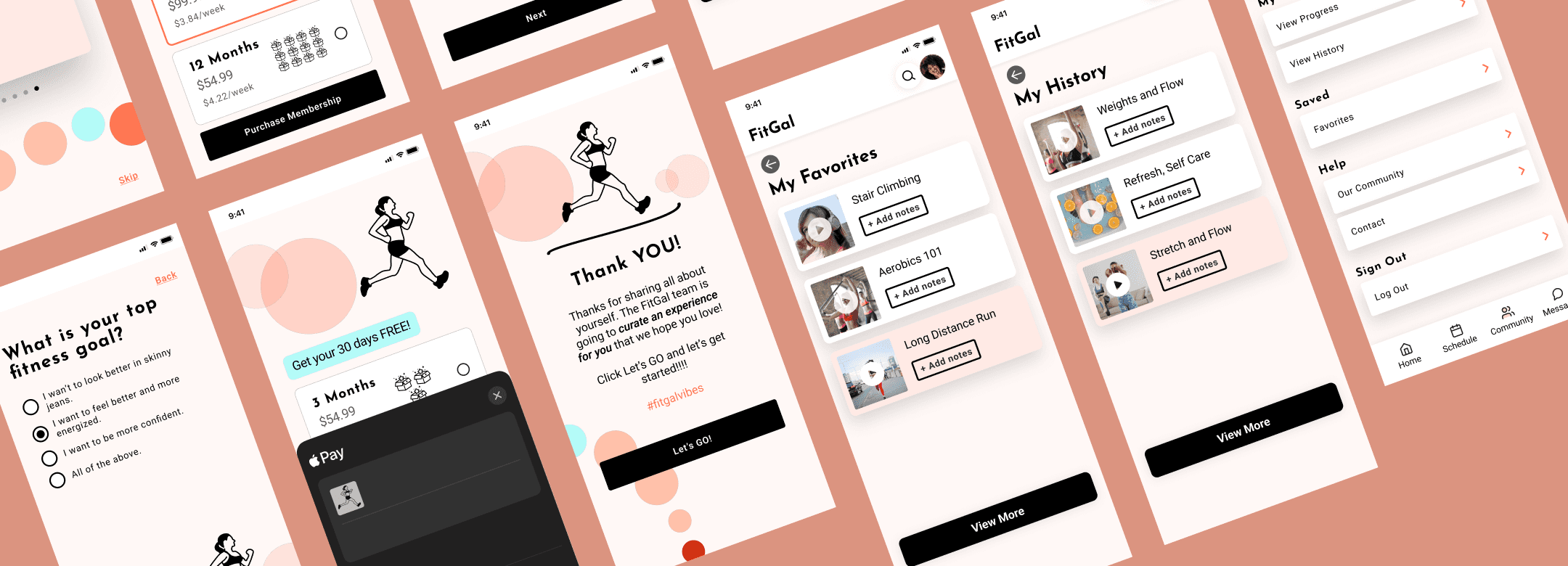
Favorites and history to support habit-building
Features explained through user movement
Exploration over commitment
Users are encouraged to try different workouts without pressure, helping them find what they genuinely enjoy.
Guided movement
Clear demonstrations and friendly instruction reduce uncertainty and build confidence, especially for beginners.
Habit-building, not streak pressure
Scheduling and progress tracking focus on consistency and return, not perfection.
Positive reinforcement
Language and micro-copy celebrate effort and energy, not just completion.
Features explained through user movement
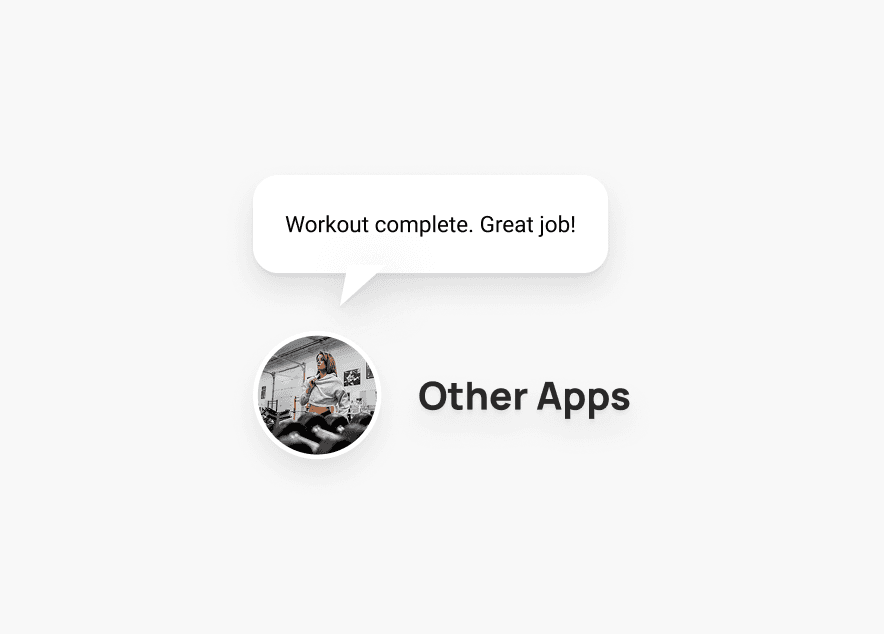
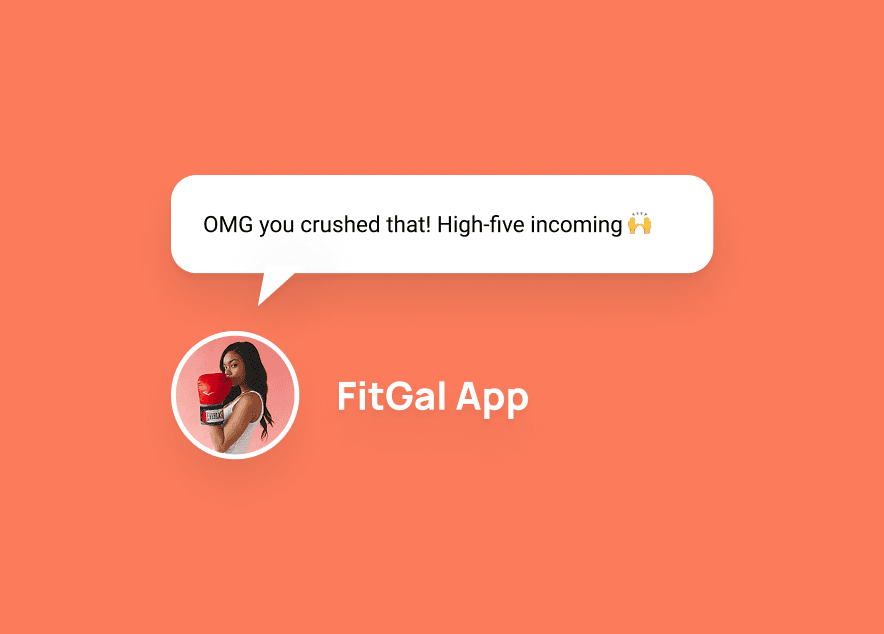
Many fitness apps communicate like a coach yelling from the sidelines. FitGal speaks like a supportive friend. Instead of: “Workout complete.” FitGal says things like: “OMG you crushed that! High-five incoming 🙌”. The tone is: light, playful, encouraging, confidence-boosting. This intentional use of personality helps users associate fitness with positive emotions, which directly supports long-term engagement.
Design Process
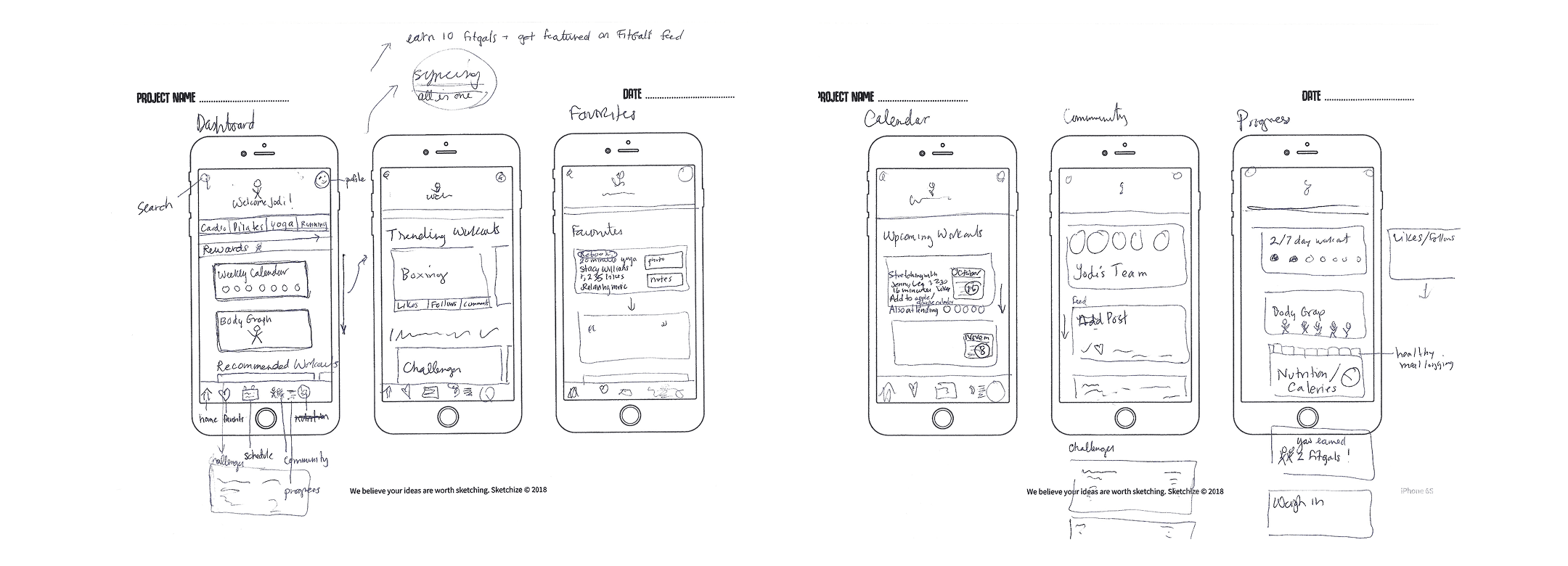
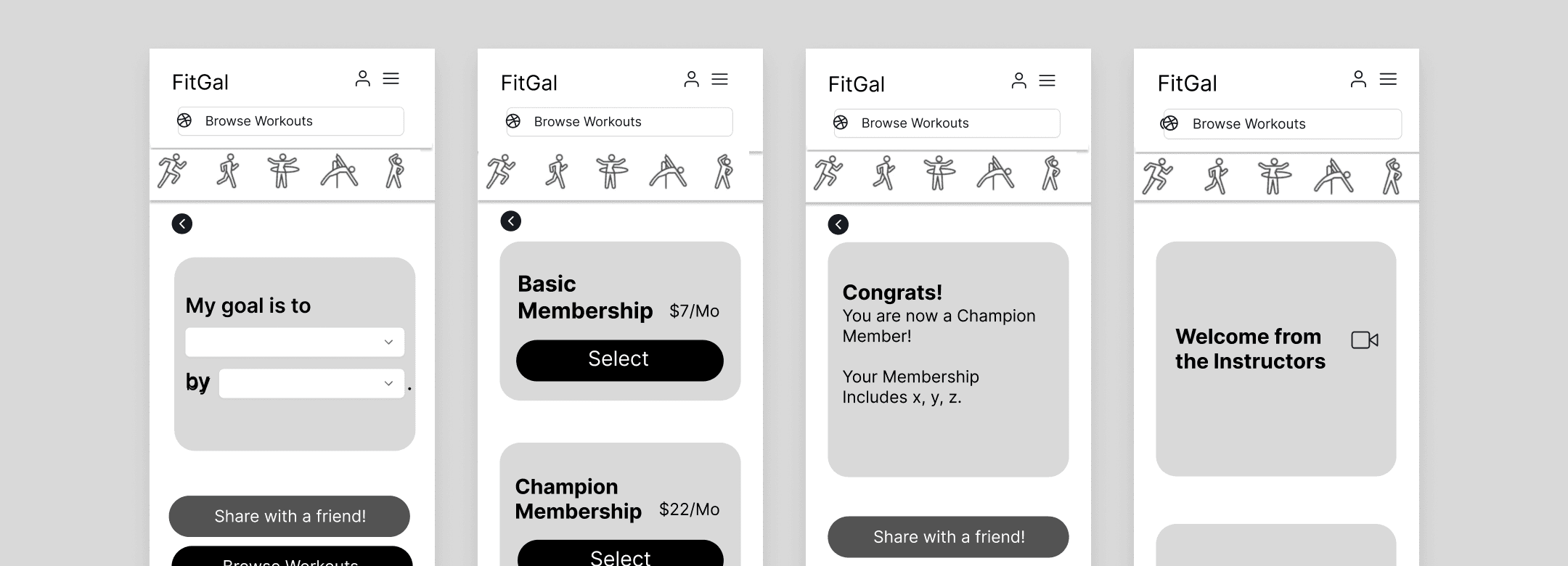
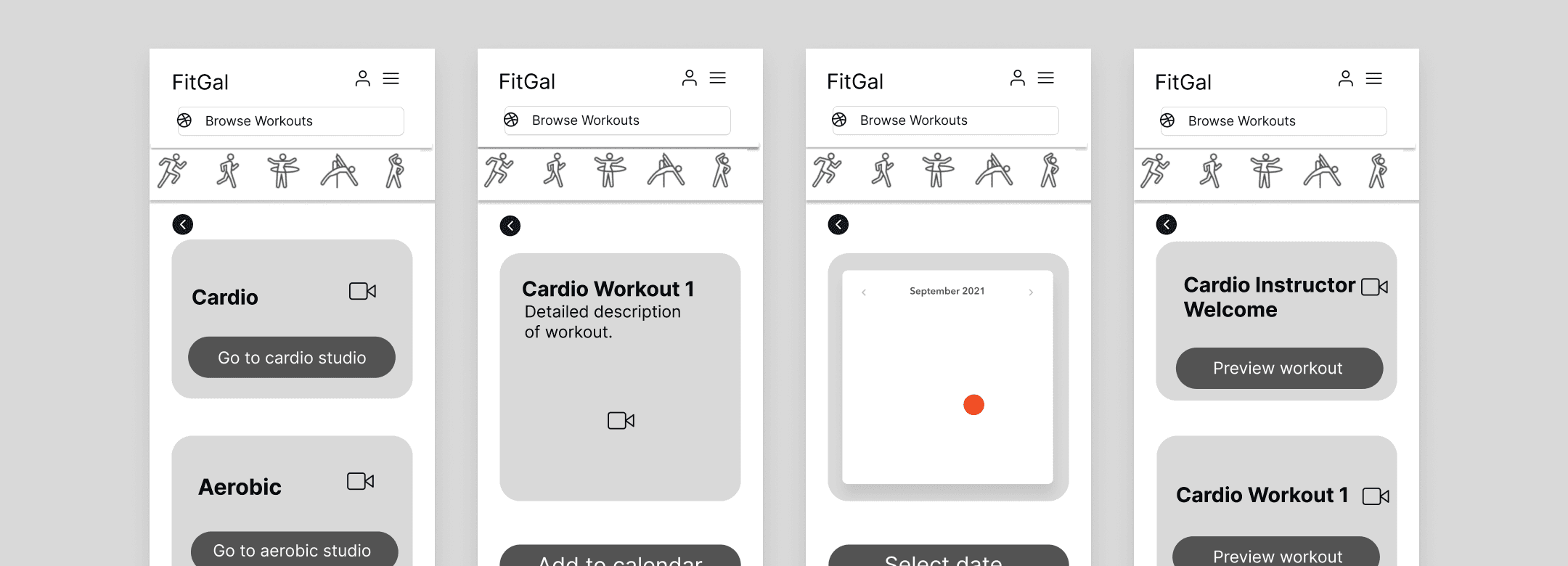
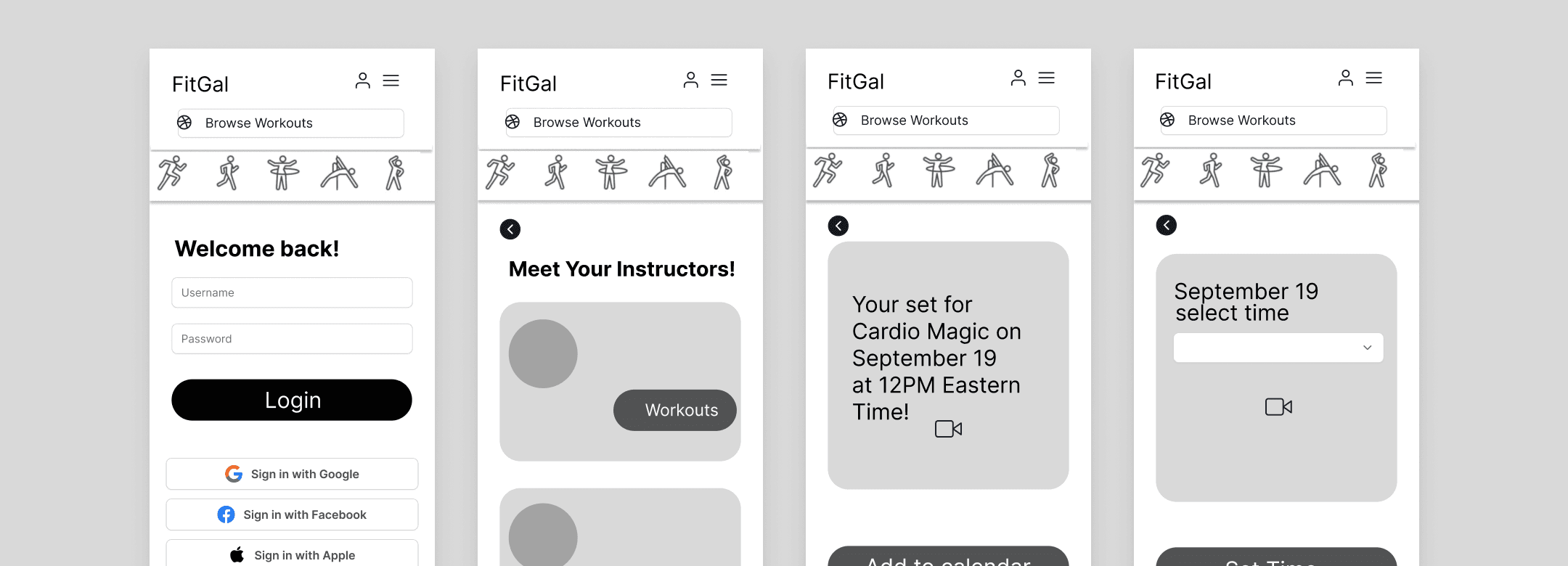
I started with mid-fidelity wireframes to validate layout, hierarchy, and flows before moving into high-fidelity design. The visual language uses soft color palettes, approachable typography, and playful motion to reinforce emotional safety and motivation.
Testing
Initial user testing revealed several usability and visual design issues in early iterations:
Lack of contrast - it lacks differentiation between elements (light vs dark) to create visual interest or draw attention.
Lacks differentiation between elements (big vs small) to create visual interest or draw attention.)
Lack of consistency in terms of same fonts, colors, which are important for user confidence.
Missing sense of cohesion across screens
The button does not fall a layout structure that is optimal
The page does not contain sufficient
information about workouts : equipment, flow of workouts.
These insights directly informed design refinements that improved clarity, increased user confidence, and strengthened overall usability.
Below is the final prototype.
Results
Reduced onboarding confusion
Identified cognitive overload during first-time use. Designed a simplified, guided walkthrough which increased early-stage user retention and faster task completion.
Improved cognitive clarity during booking & workouts
Matched workouts with required equipment and availability upfront which reduced decision fatigue and improved booking confidence.
Resolved visual inconsistency that undermined trust
Standardized UI components and visual hierarchy users perceived the app as more professional, reliable, and credible.
Eliminated navigation friction across key flows
Reworked inconsistent navigation patterns which fewer users abandoned tasks mid-flow.
Strengthened emotional resonance & motivation loop
Introduced clear progress cues and feedback moments which users felt more motivated to return and complete workouts.
Design Principles that guided me through the project
These principles guided every design decision throughout the project:
Design for the whole person
Fitness is emotional, social, and contextual, not just physical.Reduce cognitive load
Make it easier to start than to overthink.Support consistency, not perfection
Progress should feel forgiving and adaptable to life changes.Create connection, not pressure
Accountability works best when it feels supportive, not competitive.Make fitness feel approachable
Visual clarity, friendly language, and thoughtful hierarchy build confidence.